
With just over a month until the 2026 World Cup kicks off across the United States, Canada, and Mexico, negotiations between FIFA and China Central Television (CCTV) over broadcast rights have reached a critical standoff. FIFA initially demanded between $250 million and $300 million, a figure CCTV flatly rejected. Under mounting pressure, FIFA has since slashed its asking price by roughly 50%, now offering a range of $120 million to $150 million. 
However, CCTV’s target range remains steadfast at $60 million to $80 million, with no signs of compromise. This tug-of-war transcends mere dollars; it signals a historic shift as China’s market begins to assert strategic leverage against FIFA’s long-standing pricing dominance.
The time zone challenge cannot be overstated. Most matches will air during early morning or late-night hours in China, severely denting live viewership and advertising appeal. Younger audiences increasingly consume tournament highlights via short clips and mobile streaming, reducing the value of full-match live broadcasts. 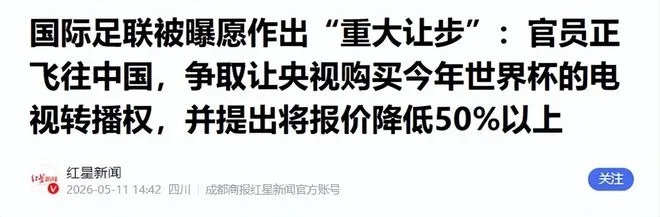
Meanwhile, the expanded 48-team, 104-match format has diluted match quality. FIFA’s logic of “more games equals more value” clashes with CCTV’s assessment that quantity does not guarantee higher commercial returns. This fundamental valuation gap sits at the heart of the deadlock.
Four major Chinese sponsors—Wanda, Hisense, Mengniu, and Lenovo—have collectively invested over $500 million as top-tier World Cup partners. If CCTV fails to secure broadcast rights, these brands risk losing their expected domestic visibility, potentially triggering compensation claims that could unsettle FIFA’s financial projections. 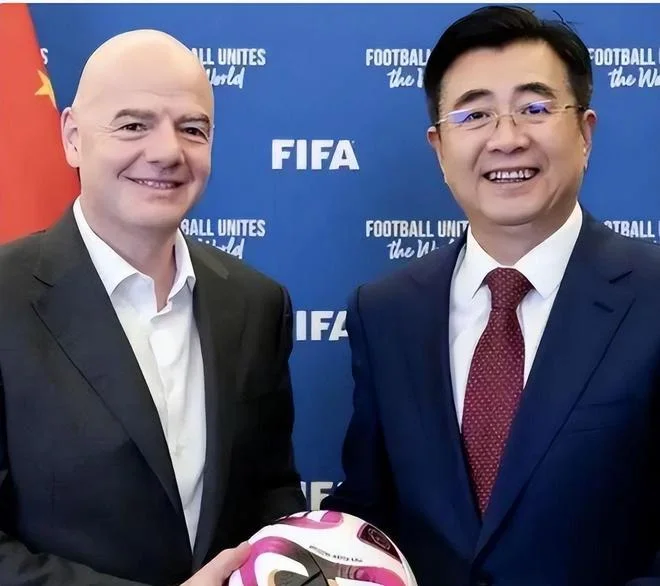
FIFA’s 2023–2026 revenue target of $13 billion relies heavily on Chinese market contributions, both in broadcast fees and sponsorship. The organization’s historical pattern of annual price hikes now faces its strongest pushback. CCTV’s firm stance is not merely a cost-saving move; it represents a redefinition of China’s role from passive price-taker to active value shaper in global sports media rights.
As the tournament approaches, every delay erodes the rights’ value. FIFA’s decision to send a high-level delegation to Beijing for further talks underscores its growing urgency. The outcome of these negotiations will likely set a precedent for future international sports rights deals in China, signaling a new era where buyer discipline and market realities outweigh seller dominance.